

 FR
FR
 EN
EN
 DE
DE


10 Things to Know About Black Cats

Often victims of false beliefs and superstitions, our black cats actually have a lot of love and tenderness to offer us! The origin of their beautiful coat, anecdotes, and superstitions, here are 10 things you absolutely need to know about black cats, adorable felines with the looks of panthers.
#1 The B Gene Behind Their Coat Color
The main gene responsible for the color of our cats' coats is the B gene. It can appear as B (dominant), giving the black color, or as b (recessive), giving the chocolate color. All cats carry the B gene, but color variations are related to other genes located on other chromosomes that influence the expression of B.
Note that some black cats may have their coat "redden." We explain why in our article: why my cat's fur is turning reddish.
You can also find all our tips on how to make your cat's coat shiny.

#2 They Often Have Yellow or Golden Eyes Due to Melanism
Melanism is the opposite of albinism. It is a genetic phenomenon that causes the completely black coat color and gives the cat golden or yellow irises.

#3 Doubtful Superstitions
Prejudices and archaic beliefs penalize our beloved black cats. For a long time, people believed they belonged to witches or were symbols of bad luck.
In Ireland, an old legend says that black cats are actually leprechauns, who take on their appearance to get closer to humans.

#4 A Good Luck Charm in Japan and the United Kingdom
In Japan, the superstition about black cats being "bad luck" doesn't exist. On the contrary, every cat, regardless of its coat color, brings good fortune and is believed to have the ability to attract wealth. They are called "Maneki-Neko," which literally translates to "inviting cat."
In certain parts of England and Ireland, encountering a black cat is not considered bad luck, but rather a sign of good fortune.

#5 Many Black Cats in Shelters
Black cats are reportedly less adopted than cats with different coat colors. According to a study conducted by the RSPCA, a black or black-and-white cat takes, on average, 10 more days to get adopted compared to a ginger cat.
Besides superstitions, there’s another surprising reason for the low adoption rate: some people consider them less "Instagrammable" than other cats... We find them absolutely stunning and particularly photogenic, as you can see in the photos in this article!
Psst: August 17th is International Black Cat Day. This day was created to raise awareness about the great cause of black cats and to encourage people to adopt one.
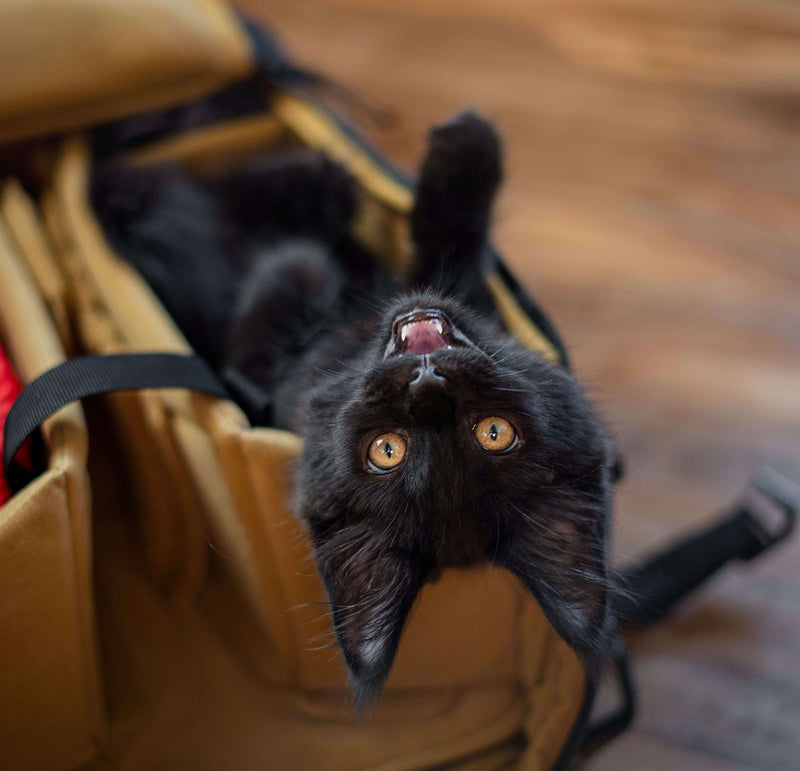
#6 Black Cats Can Be in Danger Around Halloween
In some places, shelters refuse to adopt out black cats several weeks before Halloween, fearing they might be sacrificed.

#7 They Are Little Panthers in the Living Room
Their coat highlights their eyes, which shine brightly. And their way of moving, with grace and agility, gives them the appearance of wild felines. So classy!

#8 The Bombay, a Breed of Black Cat
The Bombay is recognizable by its shiny black coat. Even its paw pads and nose are black. Contrary to what their name might suggest, they are not from India but from the United States. It was breeder Nikki Horner who decided to develop a breed of cat resembling a small panther.

#9 Famous Black Cats
Famous black cats include Salem, the cat from *Sabrina the Teenage Witch*.
Also, Snowball II, the cat from *The Simpsons*, appears in several episodes.
There’s also Luna, from the manga *"Sailor Moon*".
And finally, Oscar the Bionic Cat, who received two prosthetics to replace his rear legs after an accident.
#10 Black Cats Are Often Described as Affectionate but Also Shy
Black cat owners often describe them as affectionate and almost clingy, but also intuitive and sometimes shy.
Of course, coat color doesn’t influence a cat’s personality. However, it’s possible to draw a connection to how black cats have been treated for centuries by superstitious people.
We love our cats just the way they are, for the happiness and love they bring us every day. We feed them accordingly, with a healthy and balanced diet that provides them with quality protein. Choosing healthy food is an investment directly in your little companion’s health.


Leave a comment
51 comments
La mienne s’appelle Eclypse et je n’ai jamais regretté de l’avoir recueillie dans la rue à un an. Maintenant âgée de 11 ans c’est un amour. Son poil vire au marron et ses moustaches sont blanches mais sa bouille me fait toujours craquée
Ich bekomme seit Monaten jeden Abend bis in die morgenstunden Besuch von so einem hübschen Panther.So ein liebes verschmust es Tier mit großem Appetit 😊❤️
J’ai aussi un magnifique chaton noir ⚫️ il est magnifique et très gentil même avec le chien.
J’ai adopté deux chats noirs un mâle et une petite femelle je ne regrette vraiment pas de les avoir adopté se sont vraiment des amours mon mâle est noir et du blanc aussi
J’ai récupéré ma petite Nala qui signifie en Swahili “chance” sur l’autoroute j’ai risqué ma vie mais je ne regretterai jamais car cela fait 8 ans maintenant que le petit chaton d’à peine 1mois partage ma vie au début très sauvage et peureuse mais devenue depuis la plus caline de mes trois pepettes, cela a vraiment été une chance qu’elle rentre dans ma vie.
Tellement d’accord sur tout mais mon chat noir célèbre pref c’est quand même Jiji le chat de Kiki la petite sorcière des studios Ghibli!
J’ai eu, autrefois, un chat noir, avec de magnifiques yeux jaunes, presque oranges. Il était né un 1er mai, alors je l’avais appelé Muguet. Ce chat était l’amour de ma vie. Il est mort un peu avant ses 11 ans, d’un cancer assez foudroyant. Il s’est écoulé à peine 2 mois entre les premiers symptômes et sa fin tragique. Les traitements n’ont eu aucun effet. Cela fait 20 ans maintenant qu’il m’a quitté et je pense encore à lui presque tous les jours. C’était le chat le plus adorable qui soit, câlin et joueur, et tellement beau avec son pelage noir brillant, et ses yeux en or. Il me manque encore. Il me manquera toujours.
Team chat noir. Mon premier etait gris. Puis un jour une petite boule noire élancée est entrée chez nous. Nous l’avons gardé, aimé autant qu’elle nous a aimé. Depuis les chats noirs sont mes compagnons de vie ❤️
Team chat noir. Mon premier etait gris. Puis un jour une petite boule noire élancée est entrée chez nous. Nous l’avons gardé, aimé autant qu’elle nous a aimé. Depuis les chats noirs sont mes compagnons de vie ❤️
J’ai eu un chat noir qui a vécu 16 ans. 16 ans de bonheur, de câlins d’amour. Il nous suivait comme un petit chien, et lorsque nous sortions, il miaulait pour nous faire savoir qu’il n’était pas content. A sa disparition, nous avons voulu reprendre un chat noir, mais la vétérinaire nous l’a déconseillé . Aujourd’hui nous en avons 3. Et le bonheur qu’ils nous donnent, est immense. Nous les adorons. Bonne fête à tout les chats noirs, et merci à tout les chats d’exister.
j’ai 4 chats noirs merveilleux et hyper câlins .je suis ravis
Chachou, tout noir et de petit gabarit, s’est installé dans notre jardin. Après l"avoir nourri pendant 2 ans sans pouvoir l’approcher, il a commencé à accepter notre contact. Depuis la maison est devenue sa maison et il est notre meilleur compagnon, genre super glue et très bavard. Il y a un an sa santé s’est sérieusement dégradée à cause du diabète et du fiv. Grace au traitement et à sa résilience, aujourd’hui il se porte plutôt bien. Son état est stable, il joue et grimpe aux arbres pour notre plus simple émerveillement. We love black cats :))
Ma première chatonne, il y a 30 ans, était noire, trouvée minuscule (1,2 kg) dans une prairie. J’en suis tombée amoureuse au 1er regard. Elle était d’une intelligence remarquable, observait tous mes gestes, essayait d’en reproduire certains (ouvrir un robinet par exemple), parvenait à ouvrir les portes. Et tellement câline ! C’était une pure merveille, hélas emportée par un cancer.
Depuis, mon amour pour ces beautés ne s’est pas démenti (je les aime tous, peu importe leur couleur bien sûr) et j’en ai eu plusieurs, sans jamais choisir, arrivés par hasard (ou pas ?). Je ne suis jamais parvenue à comprendre ces a priori concernant la couleur (magnifique pourtant) de leur pelage et ce qu’elle inspire. La bêtise humaine est sans limites … et c’est bien dommage !
J’ai accueillis avec bonheur Mon Milo, il y a déjà 4 ans – Arrivé en urgence chez moi en Famille d’Accueil via la demande de l’association de mon autre chat “Robbins” – Je n’ai pas voulu les séparer, et je suis folle de lui, il est protecteur, complice, câlin, tendre. Il a comme son frère de coeur un virus qui les empêche d’être au contact des autres chats, mais ensemble, ils sont une bénédiction – Mon Milo est un vrai porte bonheur magnifique – Et pour les instagrammeurs, les chats noirs ne surf pas sur la vague mode des réseaux sociaux parce que vous n’êtes pas doués de la photographie, les chats noirs, sont là depuis fort longtemps et sont des êtres qui nous protège de l’invisible et nous invite à voir au-delà des apparences.
Sur mes 4 minettes, 2 sont intégralement noires, des moustaches aux coussinets… Enfin, je devrais dire “étaient” car Canine, 16 ans cette année, a maintenant de larges tâches de poils blancs et les coussinets roses. À la maison, on l’appelle le “dalmachat” :) Sa sœur Colombine, pourtant de la même portée et indifférenciable avant, ne subit pas le même phénomène de vieillissement et reste bien noire. Mais ce qui ne change pas, c’est que je les aime d’amour véritable tout autant l’une que l’autre ♥
J’ai toujours eu des chats noirs. Ils sont adorables ! Très affectueux et aussi possessifs! J’ai actuellement 2 femelles noires et un matou noir et blanc . Et c’est vrai la nuit d’Halloween il faut les garder à l’intérieur !
J’ai toujours eu des chats noirs que j’affectionne particulièrement pour leur magnifique robe
En ce moment même, je possède une chatte de 3 ans, trouvé avec sa fratrie en raze campagne
Même si, elle reste sauvage avec les gens qu’elle ne connaît pas, elle est très caline et somptueuse avec ses yeux d’or et sa robe d’un noire intense
Je conseille à tous de craquer pour ces panthères mignatures
Nous avons reccueilli notre Loki, un chat noir, errant, au départ très peureux et timide. Puis au bout de quelques semaines, il est devenu proche de nous, nous avons pu le déparasiter, puis l’emmener au vétérinaire pour un examen, castration et vaccination.
Il vadrouille, ça lui arrive de dormir à la maison, souvent, on ne le voit pas de quelques jours, nous lui laissons sa liberté, il sait qu’il a un chez lui maintenant (il adore la nourriture ziggy). C’est le chat le plus affectueux que je connaisse. À côté nos 2 minettes Titi et Rustine sont de vraies ingrates 😅
Longue vie à nos chats noirs, à tous nos poilus 💕
Nous avons découvert un jeune chat noir dans une forêt qui pris dans les bras c’est mis à ronronner.
Une vraie rencontre… il occupe desormais tt la maison pour le plaisir de tous.
Il a su se faire aimer dès les premieres secondes.
Que du bonheur depuis les 3 mois qu’il est là et même pour le plaisir de notre chien.
Je connais un chat noir malade cancer.
Ses maîtres sont aux petits soins pour ce chat adorable câlin malgré ce qu il a pas facile de donner comprimé tous les jours mais ça marche je me suis dis mon prochain sera ⚫️ ❤️❤️❤️❤️
J’ai une petite chatte noir âgé de 4 ans,elle est très affectueuse caline et très très pot colle.
Bonjour, les chats noirs sont vraiment les meilleurs chats du monde, pour moi c’est un rêve de gosse d’en avoir ce rêve c’est enfin réalisé eu ils l’accompagne dans la vie de tous les jours. Vive les chats noirs
Nous avons une petite Yuzu d’à peine 4 mois. Elle est rapide comme l’éclair, très joueuse et très câline. Son jouet favori c’est la plume. Et quand sa sœur essaie de la lui prendre, elle grogne.
Les chats noirs sont beaux et portent bonheur.
Notre chat noir a un super-pouvoir : il devient invisible la nuit (sauf si l’on voit ses yeux) et il le sait ! Quand nous sommes à la campagne, il est réticent à sortir, sauf à la nuit tombée. Là par contre, il reste dehors pendant 1 heure.
En fait, ce doit être un animal nocturne: le matin, il dort profondément, caché dans un coin sombre. Il est timide aussi, mais très affectueux avec ses maitres. Et quand il entend un bruit inhabituel, il peut grogner !
Je me dis qu’après des siècles où il a été pourchassé, la sélection naturelle a privilégié des individus craintifs (sauf s’ils sont en confiance), et aimant plutôt vivre la nuit !
A part cela, il est adorable !
Des que ma copine m a envoyé la photo de ma Luna sur watsap je l ai aimé et je l ai adopté.
Elle rempli ma vie de joie et de bonheur . Elle est belle comme un cœur